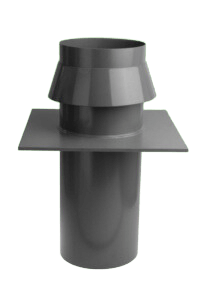
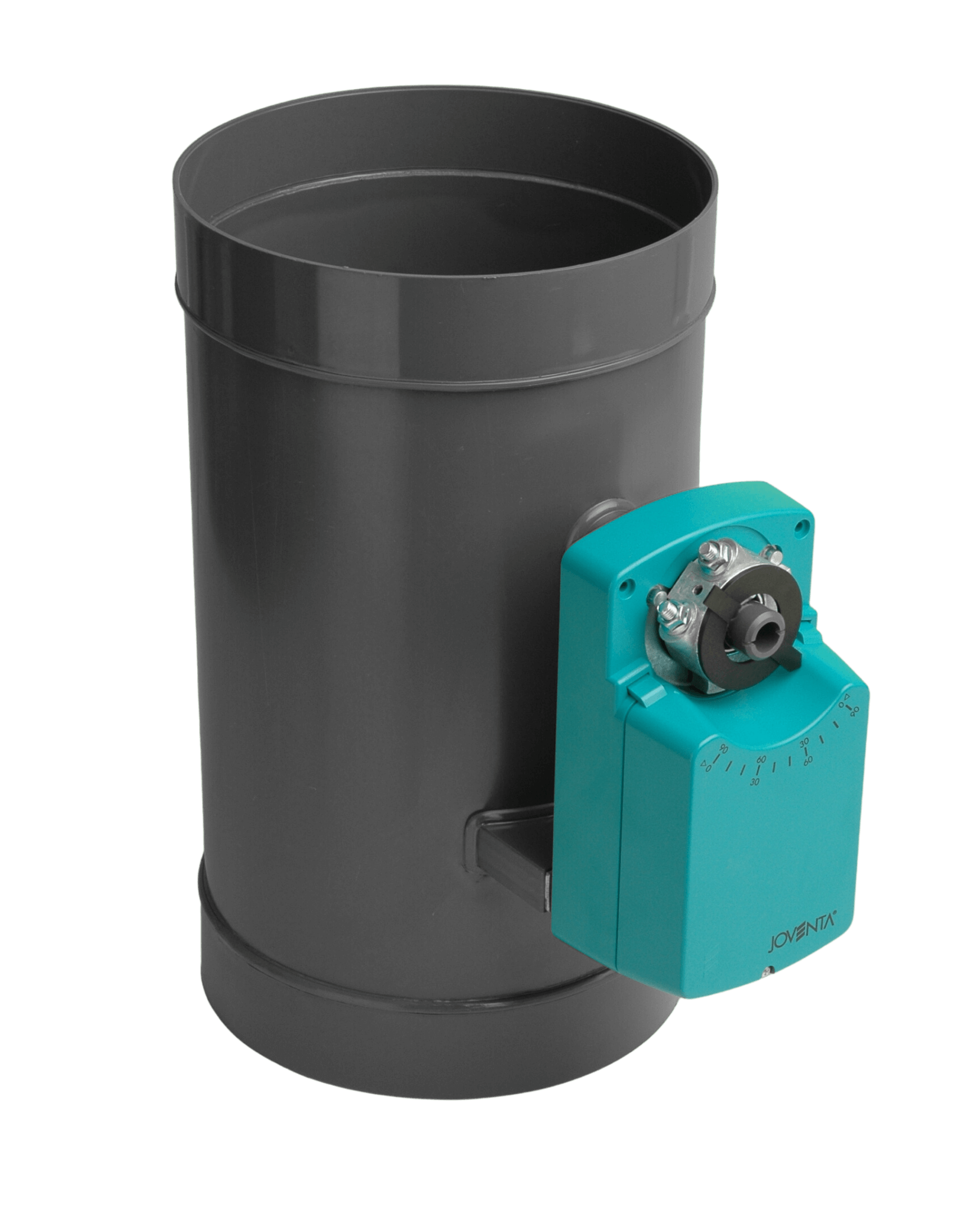
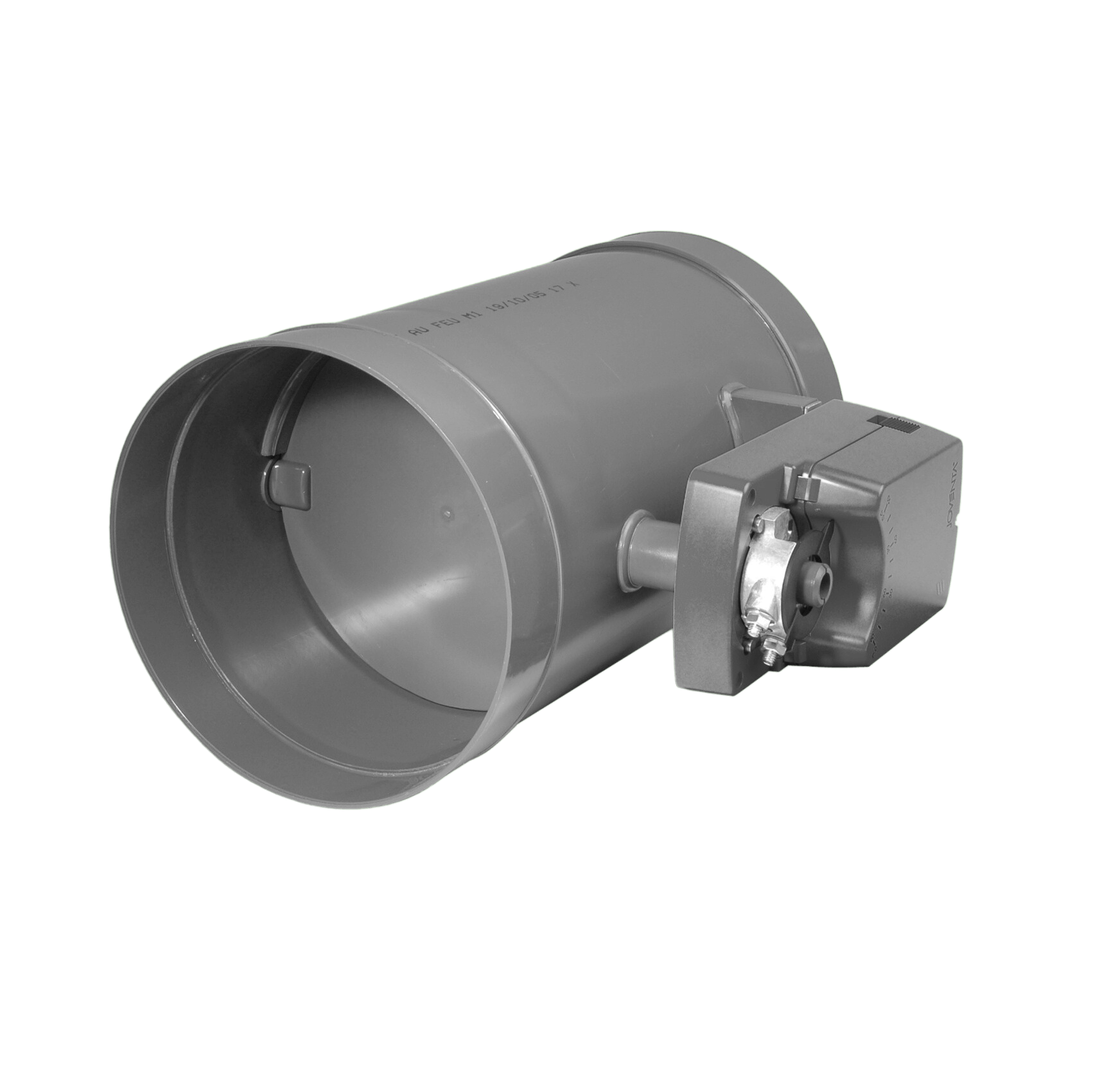
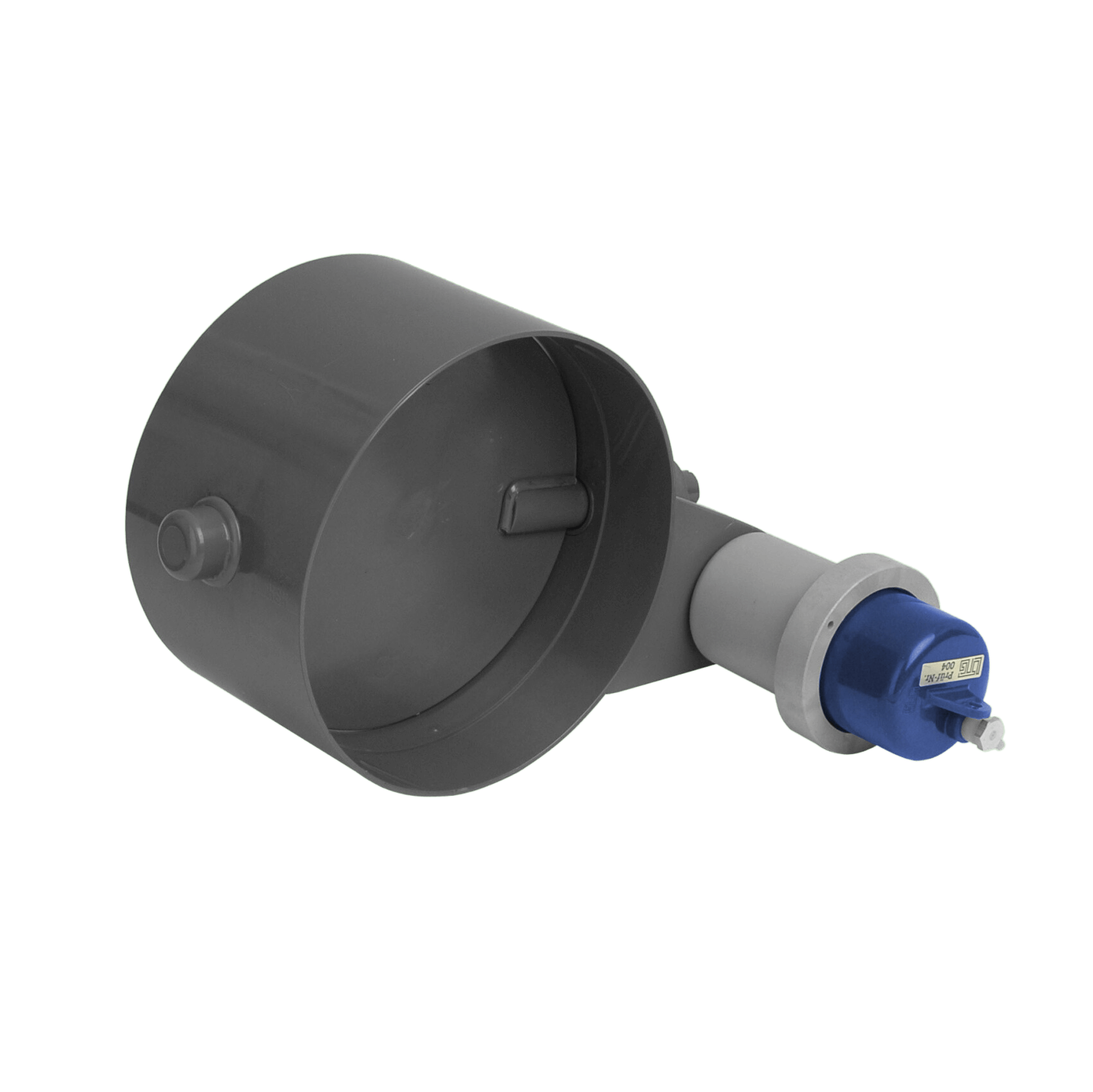
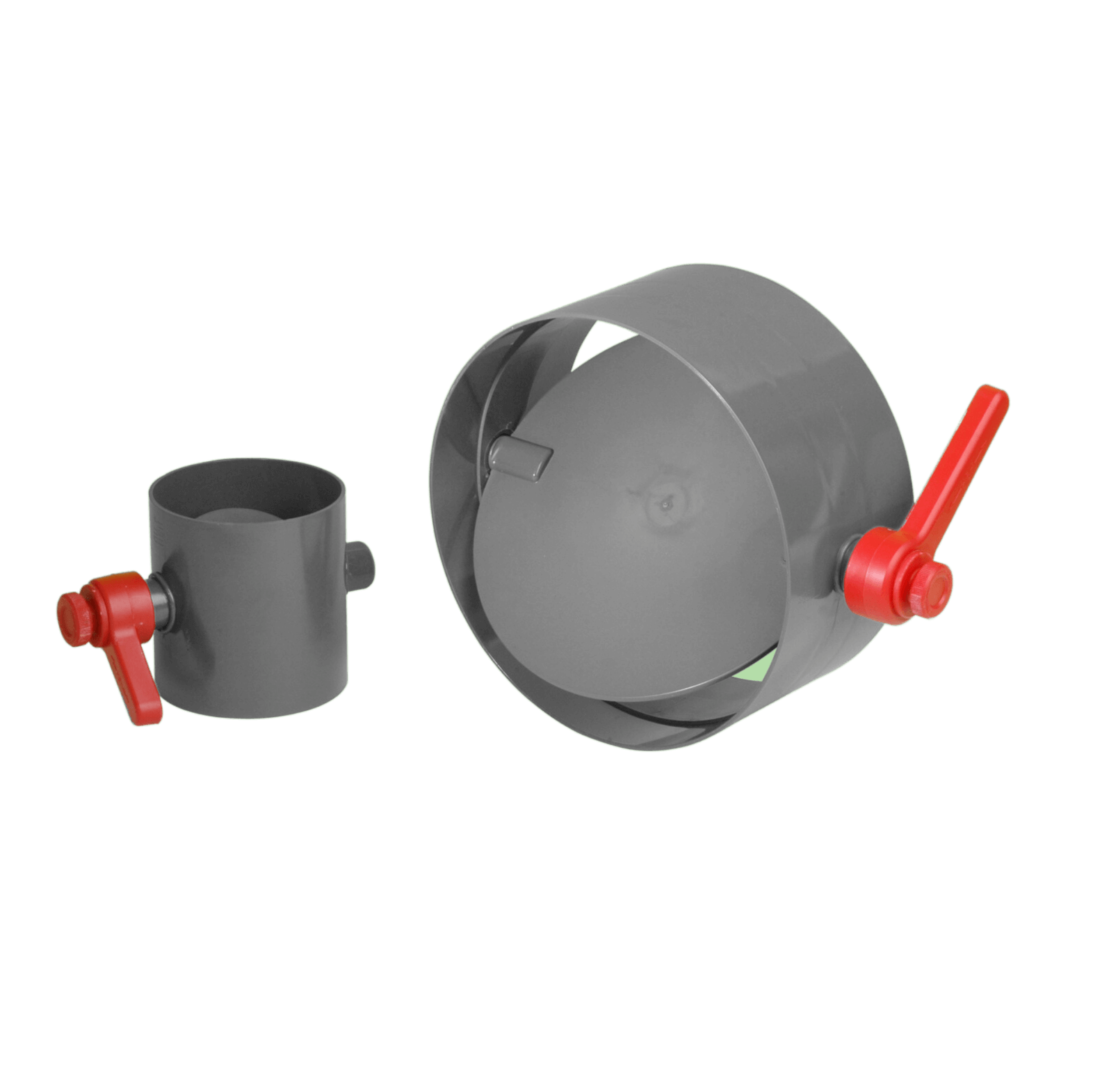
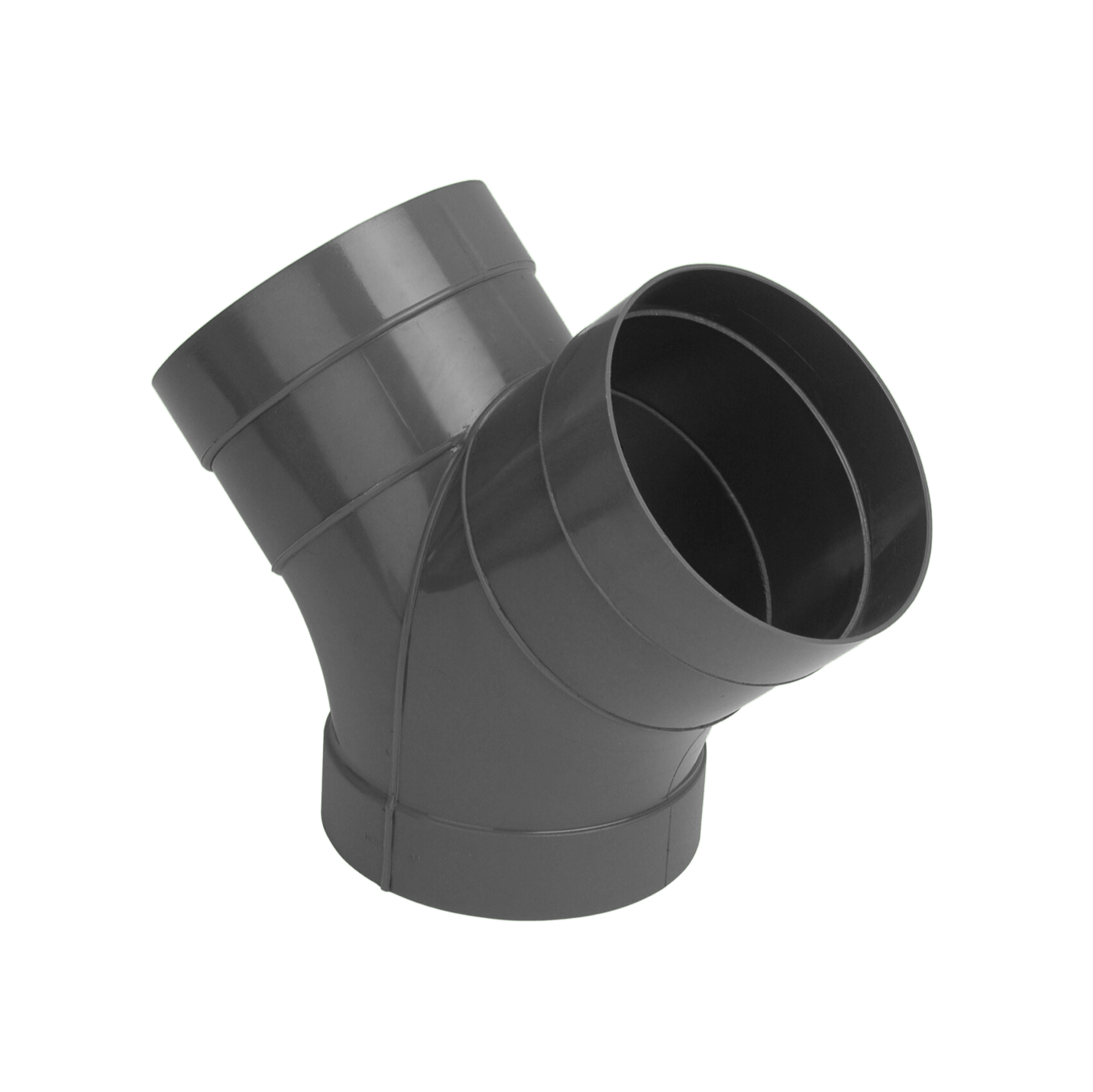
Plastic ventilation fittings are required wherever ventilation ducts are made of plastic due to chemical resistance, corrosion resistance or abrasion resistance.
As a specialist company, we offer molded ventilation parts made from various highly chemically resistant and abrasion-resistant plastics such as PVC-U, PPs, PPs-EL, PP-H, PE-HD and PVDF.
Patented manufacturing processes guarantee excellent fitting and dimensional accuracy. In our special catalog you will find all fittings required for the control, distribution and regulation of air flows up to PN 2.5.
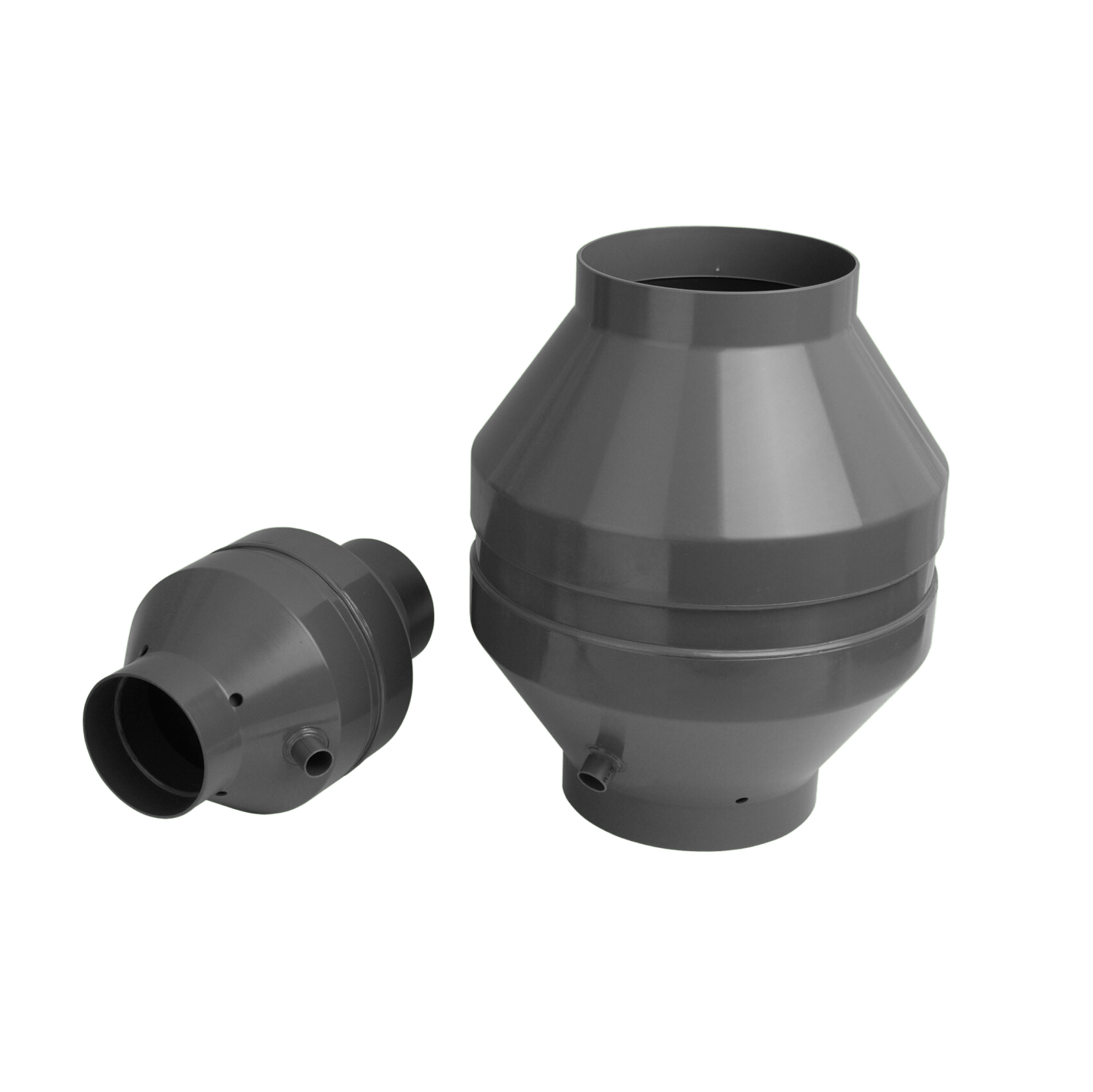
Of course, our extensive product range also includes duct silencers and volume flow controllers.
Molded parts with dimensions in the range of pipe diameters Ø50 to Ø600 mm we deliver at short notice from our central warehouse.
Larger diameters can be custom-welded in segments on request.
All fittings are supplied with sockets as standard, but can also be fitted with flanges as an option.
The airtight connection from the pipe to the fitting with socket is made depending on the material, usually by bonding with solvent cement, welding with hot air and auxiliary wire or with special adhesive or sealing tapes.
Click here for our technical data sheet for ventilation fittings.
Click here for our complete catalog of ventilation fittings.
These molded parts are available in:
- PP
- PPs and PPs-el
- PE and PE-el
- PVC-U
- PVDF
and are usually manufactured by injection molding and offer a variety of advantages for ventilation applications.
Properties of molded plastic ventilation components:
- Lightweight:
Plastics are lighter compared to metals, which facilitates the handling, installation and transport of the molded parts. - Corrosion resistance:
Plastics are generally insensitive to corrosion, making them particularly suitable in humid environments or outdoors. - Formability:
Plastics can easily be brought into various shapes, which enables a variety of design options for ventilation molded parts. - Resistance to chemicals:
Many plastics are resistant to chemical influences, which increases their durability in various environments. - Insulating properties:
Plastics can have insulating properties, which can be advantageous for certain ventilation applications.
Typical plastic ventilation fittings:
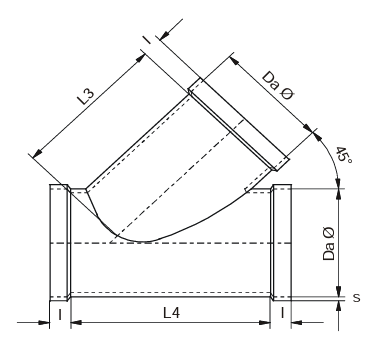
- T-pieces and branches:
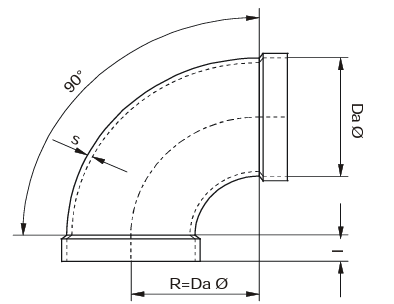
These molded parts are used to direct the air flow in different directions and to create branches in ventilation systems. - Elbows and angle pieces:
These molded parts enable changes of direction in the ventilation system and are particularly useful for bypassing obstacles. - Reducers and connecting pieces:
These molded parts are used to vary the diameter of the ventilation pipes and to connect different sections. - End pieces and closures:
These molded parts serve to terminate the air flow in a ventilation system and to enable the termination of lines or channels. -
Applications of molded plastic ventilation components:
- Residential and commercial buildings:
Ventilation molded parts are used in ventilation systems of residential buildings, office buildings, schools and other facilities. - Industrial plants:
In industrial environments, ventilation molded parts are used in large ventilation systems for the ventilation of production halls, storage sites and factories. - Air conditioning systems:
Ventilation molded parts are used in air conditioning systems to control the air flow and to ensure efficient cooling or heating. - Medical technology:
In specialized ventilation systems for laboratories or medical facilities, plastic ventilation molded parts can be used. -
Advantages of ventilation molded parts:
- Cost efficiency:
Ventilation molded parts are often more cost-effective to manufacture compared to metallic alternatives. - Easy installation:
The low weight of the plastic parts facilitates installation and transport. - Versatility:
Plastics offer a wide range of design options and can be adapted to various requirements. - Durability:
Plastics are often durable and resistant to various environmental influences. -
The selection of ventilation fittings should be based on the specific requirements of the ventilation system, the operating conditions and the applicable industry standards. Quality assurance and cooperation with experienced manufacturers are also decisive factors for the successful integration of these fittings into ventilation systems.